How Deep Is the Ocean?
A Submarine Trip to the Bottom of the Sea
 Professor Kettlewick
A Dinosaur Time Trip
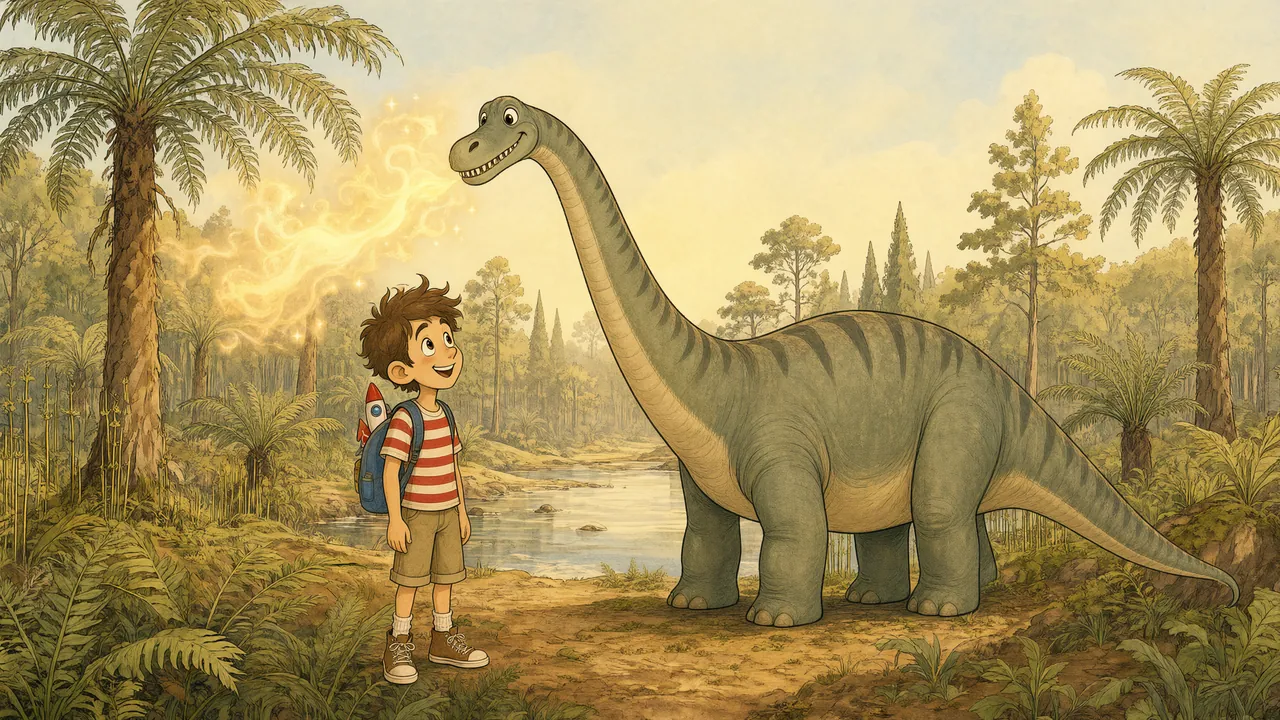
Did T. rex ever meet Diplodocus? Ollie's lunchbox shows them as best friends, so Professor Kettlewick's Whenometer takes Ollie, Felix and Nia back 150 million years to the Jurassic to find out. Golden time steam turns them lifelike beside a real Diplodocus, then they jump 84 million years forward to T. rex's river, 66 million years ago. Episode 3: Did T. rex Meet Diplodocus?
Tap a picture to watch from there on YouTube.
Science from the episode that you can do at home.
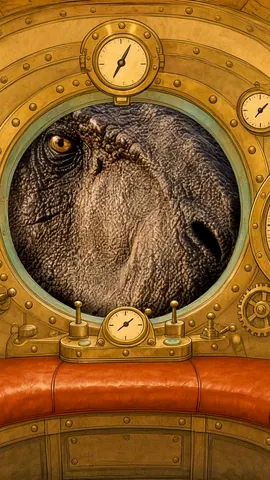 Did T. rex Really Roar?A 30-second Short from Episode 3, plays on YouTube
In films, T. rex always roars. But did it really? Ollie and Felix come face to face with a T. rex at the Kettle's window (and Archimedes can smell Ollie's sandwich). Nobody knows for sure what T. rex sounded like, but scientists think it may have boomed with its mouth shut, like some birds and crocodiles do: a sound so deep you feel it in your tummy!
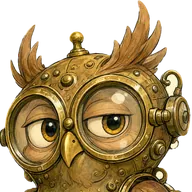
Archimedes (telling the story): This is a story about dinosaurs. They were big, they were old, and they are all gone, so nobody in this story gets eaten. The professor asks me to add: probably.
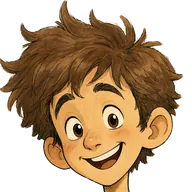
Ollie: Look at my new lunchbox! T. rex and Diplodocus. Best friends!
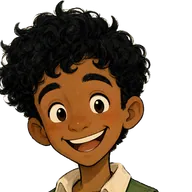
Felix: Lovely lunchbox, Ollie. Terrible calendar. Those two never met.
Ollie: It's a lunchbox, Felix. It's meant to have sandwiches in it, not facts.
Felix: Actually, did you know they lived millions and millions of years apart?
Archimedes: Yes.
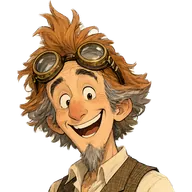
Professor: Did T. rex and Diplodocus ever meet? Ooh, what a splendid question! Fossils can tell us. Or we could go and look. I do enjoy a puzzle that needs a boiler.

Nia: Let's build it! I don't know what it is yet, but I've already drawn it!
Professor: No need, Nia. I built it last Tuesday!
Archimedes: He hopes to finish it last Monday.
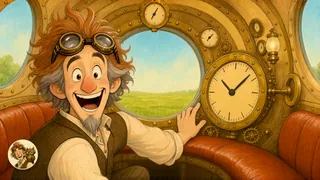
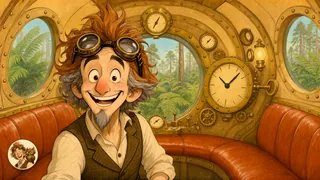
Professor: Meet the Whenometer! The depth gauge says how deep; this says how long ago. Now, then Tuesday, then Rather a Long Time Ago, then a bit we don't talk about. Every turn of the key goes further back!
Felix: Somewhere dry, please. I would rather read about mud than stand in it.
Professor: Now, Archimedes, where are my goggles?
Archimedes: Head.
Professor: How do we know when they lived? Fossils! Bones, teeth, even footprints, turned to stone, in rock that piles up like pancakes, the oldest at the bottom. And ash from old volcanoes keeps time, like a clock!
Ollie: So if I dig in Granny's garden, I'll find T. rex first, and Diplodocus underneath?
Archimedes: In theory. In practice, you will find Granny's potatoes, and then a very cross Granny.
Felix: Actually, did you know T. rex lived sixty-six million years ago? And Diplodocus, a hundred and fifty million?
Archimedes: Yes.
Ollie: How long is a million years? Longer than the summer holidays?
Archimedes: Much longer. I tick once every second. One tick for every year back to T. rex would take me more than two years, ticking day and night. Back to Diplodocus: nearly five.
Professor: First stop: T. rex! Nia, three turns, please.
Nia: Three turns! One, two, three... and a few more for luck!
Archimedes (telling the story): The Kettle travels in time the way a kettle does everything: slowly, and then all at once, with a noise.
Ollie: Are we nearly then yet?
Archimedes (telling the story): We landed with a bump. Something enormous walked past the window. Then something else enormous. Then the first thing's tail.
Ollie: Professor? How many legs has a T. rex got?
Professor: Two, Ollie. Why?
Ollie: Because I've counted eleven.
Archimedes (telling the story): We climbed out into a forest of ferns. Felix looked at the ground for a very long time.
Felix: There's no grass. Not one blade. And I can't find a single flower. We're much too early! Nia, how many turns did you do?
Nia: Three... and four for luck?
Archimedes (telling the story): Luck, it turns out, is about eighty-four million years. We were in the Jurassic.
Ollie: Hello, Diplodocus! I'm Ollie!
Archimedes (telling the story): Ollie was talking to its knee. Its head would be joining us shortly.
Ollie: Oh! Hello! You've got a very small face... for such a very big bottom!
Archimedes (telling the story): Then the time steam reached us, and for a little while, we were not drawings at all.
Ollie: Felix... it's real. It's a real-sized dinosaur.
Archimedes: I had always wondered what I weighed. Quite a lot, it turns out.
Professor (telling the story): See its teeth? Thin, like pencils, in a row like a comb. It strips the leaves off and swallows them whole. And each tooth gets a brand-new one about once a month!
Ollie: A new tooth every month? My tooth fairy would need a second job!
Professor (telling the story): Nose to tail, about twenty-six metres: longer than a tennis court! And most of that is neck and tail.
Felix: I have discovered some soft ground. With my left foot.
Nia: I've drawn its head and half its neck. I'm going to need more paper.
Archimedes (telling the story): Nia needed four more pages. And that was only the neck.
Professor (telling the story): And over there: a Stegosaurus! It lived at the same time as Diplodocus.
Nia: Look at the plates on its back! I bet they're solar panels.
Archimedes: Nobody knows what they are for. Solar panels is a guess, and a good scientist tests a guess. Nia is looking for the plug.
Professor: Right, everyone, back to the Kettle. Walk, don't run: running is for things with eleven legs. Archimedes, my goggles!
Archimedes: Head, professor. Still.
Ollie: Goodbye, Diplodocus. I'll remember you whenever Mum says, 'Chew properly!'
Felix: We're drawings again. But my boot is still muddy.
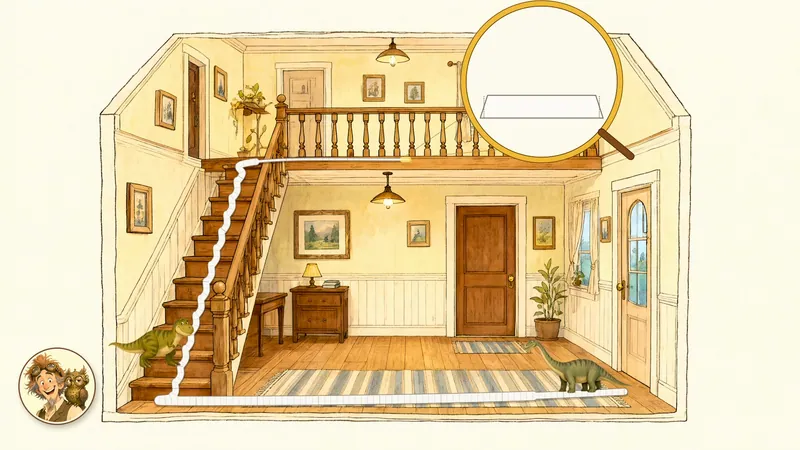
Professor: We were early, Felix! Picture a roll of paper, rolled from the workshop door down the hill: one sheet for every million years. The door is today. T. rex is sixty-six sheets away, and Diplodocus is way down at sheet one hundred and fifty!
Felix: So there's more time between Diplodocus and T. rex than between T. rex and us!
Archimedes: Are you sure?
Felix: Yes.
Archimedes: I was going to say that.
Nia: Date checked. Direction checked. Forward eighty-four million years. Luck can take the bus.
Felix: Flowers! Right time at last. Nobody touches the key. Nia. Nobody.
Professor (telling the story): Triceratops! Three horns, and a great bony frill round its neck, like a shield. It lived right here, alongside T. rex.
Archimedes (telling the story): The professor said we could have one little look outside, if we kept quiet. The time steam made us real again.
Ollie: A footprint! It's longer than my arm!
Felix: I should like to revise my position on mud.
Professor: Three long toes and sharp claw marks: a big meat-eater. Possibly T. rex. Let's admire it from somewhere with a door. Everyone inside!
Archimedes (telling the story): Then the Triceratops lifted its head. And the birds stopped singing.
Professor: Nobody move. Nobody make a sound.
Archimedes: I tick.
Professor: Then tick quietly. And everybody, watch the window.
Archimedes (telling the story): And there it was. Tyrannosaurus rex. Twelve metres from nose to tail, as heavy as an elephant. It waded across the river, and came nearer.
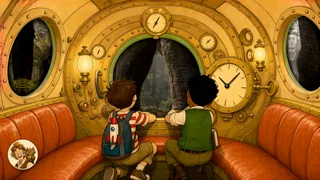
Archimedes (telling the story): It came so near that its head filled the whole window. Nobody blinked. I cannot blink, so I won. And nobody was eaten. I did say probably.
Ollie: Can he smell my sandwich?
Archimedes: Ollie, I can smell your sandwich.
Felix: Now it's going to roar. They always roar in films.
Professor: Films, Felix, are made by people who weren't there.
Archimedes (telling the story): It did not roar. It boomed, with its mouth shut. So deep that the teacups rattled.
Ollie: He can do that with his mouth shut?
Archimedes: A skill I have often recommended to the professor.
Professor: Scientists think it may have boomed like that, like some birds and crocodiles do. You feel it in your tummy!
Felix: Archimedes, did you know that?
Archimedes: No. Write it down, Felix. It will not happen again.
Archimedes (telling the story): Then the Kettle joined in. At last, a conversation at its own volume.
Archimedes (telling the story): It heard the whistle, and tilted its head this way, then that way.
Ollie: That's exactly what Granny's hens do!
Professor: They would, Ollie. Hens and T. rex are cousins. Very distant cousins. Don't tell the hens; they'd be unbearable.
Professor (telling the story): And off it goes. Look at those little arms: too short even to reach its own mouth!
Ollie: Poor thing. He can't even scratch his nose.
Archimedes: He cannot clap, either. No birthday parties. That explains a great deal.
Archimedes (telling the story): Nia set the Whenometer for home. As we whooshed forward, something bright streaked across the sky, far, far away.
Nia: That one wasn't me!
Archimedes: No. That was a rock from space, as big as a city. Its dust darkened the sky, plants stopped growing, and the big dinosaurs had nothing to eat.
Archimedes (telling the story): We came home sixty-six million years later, and six minutes before we left.
Ollie: Professor! There's a dinosaur in the garden!
Archimedes (telling the story): Everyone looked. On the Kettle's spout sat a robin.
Professor: When that rock hit, most of the dinosaurs died out. But some of them were already birds! A few of those survived, and every bird you have ever seen comes from them!
Ollie: So a robin is a dinosaur? In our garden?
Archimedes: I said they were all gone. I was wrong. We built a time machine to find a dinosaur. Next time, I shall look out of the window.
Nia: I've copied out my Diplodocus properly. His tail's still in the hallway.
Professor: My goggles! A magnificent discovery!
Archimedes: He has excavated his own forehead. A long word for dug up.
Ollie: I want a new lunchbox. T. rex and a robin. Not best friends. Family.
Felix: Actually... that one's right.
Archimedes: Yes.
Professor: Try this with a grown-up! Take a roll of toilet paper. Every sheet is one million years. Count sixty-six sheets: that's T. rex. Keep going to a hundred and fifty: Diplodocus. And people like us? We fit on less than half of sheet number one!
Professor: And next time you see a bird, wave hello to a dinosaur! Keep asking questions! See you next time with Professor Kettlewick!